


The Kurdistan Investment Board has confirmed the formation of joint committees with the National Investment Commission (NIC) to develop cooperation in industrial sectors and support continued investment activity across Iraq.
Mohammed Shukri, head of the Kurdistan Investment Board, told the state-run Iraqi News Agency (INA) that relations with the NIC are strong, with joint committees operating across industry and factory oversight, and mutual facilitation measures in place. He noted that no conflicts or problems have been recorded regarding the follow-up of Iraqi investors’ activities.
Shukri stated that the Board operates under Investment Law No. 4 of 2006, issued by the Kurdistan Parliament, which closely mirrors federal legislation. He added that instructions issued by the Board are aligned with federal laws and regulations, contributing to a more supportive environment for the private sector.
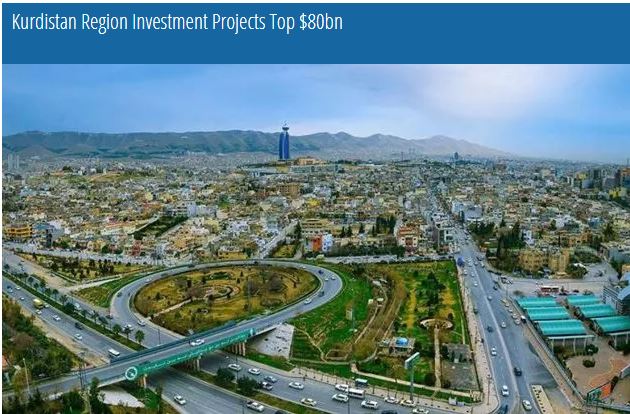
The number of investment projects in the region over the past two decades has exceeded 1,700, with a combined value of approximately $80 billion. Key details include:
- Industrial sector accounts for 45% of projects, covering steel, iron, cement, refineries, power stations, and infrastructure
- Residential sector represents around 15% of projects
- Foreign investment stands at 17%, comprising both joint and wholly foreign-owned ventures
- Investing countries include Turkey, Iran, Lebanon, Jordan, Saudi Arabia, Kuwait, the UAE, Egypt, France, the United Kingdom, the United States, and China
- Investment projects have grown by 400% compared to the period before 2022
The regional government is currently focused on three priority sectors: industry, agriculture, and tourism. A plan extending to 2030 includes the development of modern industrial zones, agricultural greenhouse projects, clean energy initiatives, dam construction, mountain tourism resorts, and a tower exceeding 450 metres in height, described as the tallest in Iraq.
Of 12 previously stalled projects, most have been resolved. The remaining case, the Dashti Bahsh project in Erbil, is being addressed through a new investment licence and compensation for affected residents. Shukri attributed past delays primarily to the security situation following the 2014 conflict.
Shukri extended an invitation to both Iraqi and foreign investors, citing a secure environment, full government support, and significant untapped opportunities across all Iraqi governorates.
(Source: Iraqi News Agency)
